
by Kenny Berkowitz
For as long as there’s been environmental law, Cornell has taught it. As a new professor, Ernie Roberts inaugurated the course in the 1970s, teaching for two decades before passing the torch to Jeffrey Rachlinski, who taught it for most of the next three decades. Then in 2021, at the start of his term as dean, Jens David Ohlin announced plans to build an environmental law program as one of his main goals, outlining a three-part approach that encompasses cross-disciplinary research, hands-on advocacy work, and a range of courses for the university’s undergraduates, graduates, and law students.
“The environment has long been an important field of study at the university, with nearly every unit on campus offering some focus on the incredible complexity of the natural world,” says Ohlin, the Allan R. Tessler Dean and Professor of Law, talking in his office on a hot August afternoon. “Students have a real hunger for it, and there’s a sense that no matter how they’re approaching the environment, their understanding is going to be fundamentally incomplete without a background in the law.
“Training students to enter the legal profession is our primary instructional mission,” he continues. “But our broader mission is to train people with legal knowledge, no matter how they ultimately use it. We’re doing that, as you can see in the enrollment numbers and in the impact this program is making. We’re building on a very long horizon, and with the addition of Leehi Yona and Allison Chatrchyan to the faculty, we’re well on our way.”
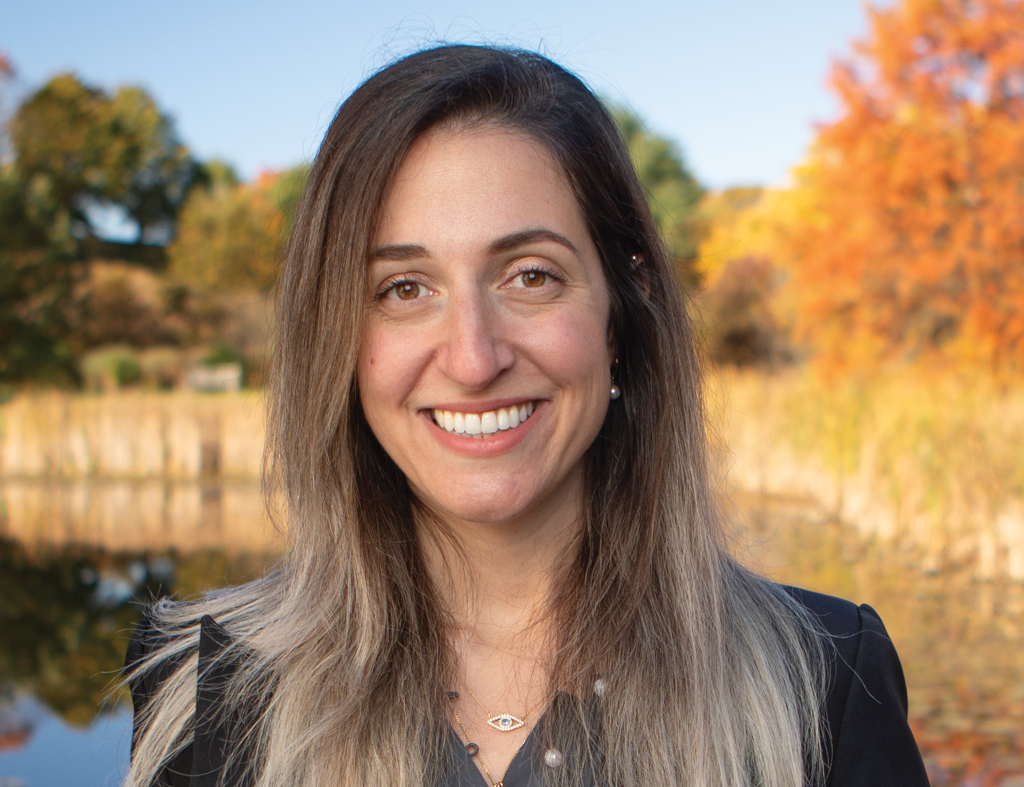
Leehi Yona, who arrived as an assistant professor of law in July 2024, holds a J.D. from Stanford Law School and a Ph.D. from Stanford university, where her dissertation examined ways of counting greenhouse gas emissions. Described by Ohlin as “a brilliant young scholar and an internationally recognized expert in climate policy,” Yona has presented at dozens of conferences across the country and been published in the Harvard Environmental Law Review, Nature, Policy Design & Practice, Science, and UCLA Law Review.
In the fall, Yona teaches Environmental Law and Policy, which covers key challenges, regulations, and landmark cases in environmental law. In the spring, she teaches Climate Change Law and Policy, which examines legislative tools and strategies for addressing climate issues in the United States and around the world.
“Environmental law is so many things: It is conservation and biodiversity and endangered species. It’s air pollution and water pollution. It’s policy and permitting and regulatory frameworks.”
“The classes are designed to have very little overlap,” says Yona, the Gearns & Russo Faculty Fellow of Environmental Law, talking between summer conferences. “Environmental law is so many things: It is conservation and biodiversity and endangered species. It’s air pollution and water pollution. It’s policy and permitting and regulatory frameworks. Then in the spring course, learning about climate change, we have a constantly moving target. We begin with a foundation in climate law and continue with a deep dive into justice issues in international treaties and local, state, and federal laws.
“Having students who are excited about making a difference, about becoming lawyers in the best sense, has been really important to me,” she continues. “A couple of years ago, students from the Environmental Law Society proposed hiring a full-time faculty member dedicated to teaching climate law, and reading the proposal was a sign that Cornell would be the right place for me. It was incredibly well thought out, and it was so evident the students had taken a lot of time putting it together. The length, the level of detail, the professionalism—their commitment was palpable. You could feel how much they cared about building this program.”
Yona joined Allison Chatrchyan, who holds a University of Maryland Ph.D. in international environmental politics and has been teaching at the Law School since January 2023. Over the past five semesters, Chatrchyan has taught two courses, Environmental Law and Policy in the fall and International Environmental Law and Policy in the spring. She’s been leading Cornell delegations to the U.N. Climate Change Conference since 2015 and continues to study artificial intelligence as director of stakeholder research and engagement in the university’s AI-LEAF Institute (AI for Land, Economy, Agriculture & Forestry); both Chatrchyan and Yona are also faculty fellows at the Cornell Atkinson Center for Sustainability, which promotes collaborations in reducing climate risk.
“Allison has spearheaded teaching these courses, which are incredibly rigorous,” says Ohlin. “She understands the science as well as any scientist and the law as well as any lawyer.”
Chatrchyan’s Environmental Law and Policy draws a mix of students from the Colleges of Agriculture & Life Sciences; Architecture, Art, and Planning; Arts & Sciences; and Engineering; and the Brooks School of Public Policy. They begin with the legal reasons why regulating the environment is so challenging before covering the major statutes and core topics, including sustainable development, climate justice, and transnational disputes, which has become one of the most effective strategies for legally addressing ozone depletion and climate change.
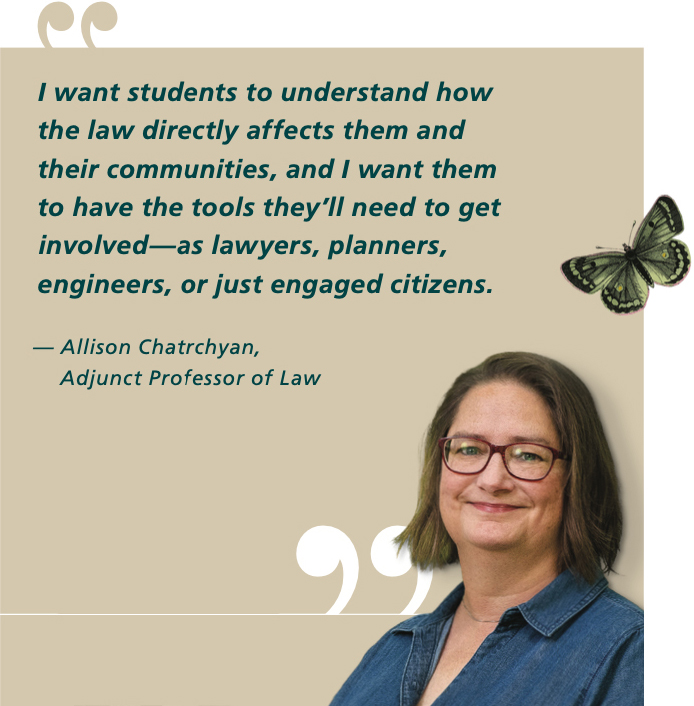
“We do a lot of hands-on activities in the classroom, and almost every class has time where students work together as a group to search for water permits or Superfund sites in their community,” says Chatrchyan, adjunct professor of law, whose CALS research focuses on how decision makers view and implement policy changes to adapt to climate change. “I want students to understand how the law directly affects them and their communities, and I want them to have the tools they’ll need to get involved—as lawyers, planners, engineers, or just engaged citizens.
“When I started working on this issue, climate change was just beginning to be understood as a serious problem,” she continues. “I started my career in Washington, D.C., working on the Montreal Protocol and on the Superfund law for the cleanup of hazardous waste sites. I’ve seen the positive impact of environmental legislation, and I’ve seen how much change there’s been to undo the foundational laws we have in place. There’s been a lot of backsliding against environmental justice, but I think we’ll come around to a time when more people see the environment as a human rights issue. Students are clearly making the connection.”
Stewarding the Land
In the spring of 2021, Mary Gail Gearns ’85 and David Russo ’85 moved from New York to Colorado, settlingin the mountains west of Aspen to start their next stage in an area with skiing, hiking, and 180,000 acres of federally protected wilderness.
“We live in an incredibly beautiful part of the country,” says Russo, talking after a ten-mile workout in preparation for running his next marathon. “We’ve seen the harmful effects on the environment that have taken place within our lifetime, and we’d like the natural world to be protected. Although neither of us practiced environmental law, it’s something that resonates with us individually—and it’s a priority the dean has identified as important.”
Gearns has a long history of involvement at the Law School, serving as chair of the Dean’s Advisory Council from 2019–2023, and after meeting with Jens David Ohlin earlier this year, she and Russo created an endowment for the Gearns & Russo Faculty Fellow of Environmental Law, currently held by Assistant Professor Leehi Yona, the Law School’s first full-time faculty member dedicated to teaching environmental law.
“We believe Cornell Law plays an essential role in training skilled lawyers,” says Gearns, who previously funded a student scholarship in her name with Russo. “The rule of law is a cornerstone of our democracy, and we’re happy to support the Law School and the dean’s priorities. As students, we benefited from the contributions made by alumni, and we’re committed to continuing that philanthropic tradition.”
“Thanks to the generosity of Mary Gail Gearns and David Russo, we’re able to continue building the opportunities for our students in environmental law,” adds Yona. “Their support strengthens not only the program itself, but nurtures the community of students, faculty, and alumni dedicated to addressing some of the most pressing issues of
our time.”
For two years, Chatrchyan co-led the undergrad course with Jeffrey Rachlinski, who taught the Law School’s sole environmental law course for eighteen of the last thirty-one years. Over that time, he saw a core group of students, about six to twelve each year, graduate into careers in environmental law, while the rest learned to apply the course’s lessons in multiple different ways, from small-town firms to Big Law. Out of all his classes, Rachlinski calls Environmental Law “the hardest to teach,” requiring an enormous attention to detail, and he sees the course as a crucial tool in teaching law students to become lawyers.
“Environmental Law is where the rubber meets the road, where policy becomes reality,” says Rachlinski, the Henry Allen Mark Professor of Law, who served for years as faculty advisor to the Environmental Law Society. “I tell my students, ‘You can understand why a chemical is doing harm, why it’s bad for the environment, and why it has to be regulated. But unless you have a statute behind you, nothing is going to happen. You’re not going to convince a court by being pure of heart. You’re going to convince them by proving the law is on your side.’
Big Red Roots
Nowadays, Edmund Muskie (1914–1996) is most often remembered as a one-term Governor of Maine, a United States Senator, a Secretary of State under Jimmy Carter, the Democratic nominee for vice president in 1968, or a leading Democratic candidate for president in 1972.
Jeffrey Rachlinski wants to set the record straight. “In the United States, environmental law is founded upon federal statutes, the two most important of which are the Clean Air Act and the Clean Water Act,” says Rachlinski, even before hearing the interview’s first question. “Before that, environmental law consisted of a patchwork of totally inadequate state law, and though people sometimes forget, Ed Muskie, a J.D. from the Cornell Class of 1939, was the person who changed that.
“Regulation of clean air and clean water are the heart and soul of environmental law,” he continues. “People tend to focus on climate change, but most of environmental law has to do with pollution control, which started with Muskie. He was the founder, the principal architect of those two federal statues, the man who drove those bills through the Senate. Without him, and without Cornell, there would be no environmental law.”
“We are a law school,” he continues. “In this country, we’ve spent fifty-odd years drafting regulations on lots and lots of chemicals. The statutes are very detailed, and they’ve been carefully picked over by lobbyists. If you want to win your case, you’d better understand the law, because I can promise you that industry has hired ten lawyers for every one of you, and they’re going to pore through the statutes to advantage their side. The process might be tedious, because it’s very, very detailed, and it’s so in-the-weeds, but that’s what students in this class learn.”
In 2024, those lessons from Chatrychan and Rachlinski led Tara Scown ’26 to Ian M. Kysel, whose Transnational Disputes Clinic was considering a case pending before the International Centre for Settlement of Investment Disputes (ICSID), the world’s leading body for resolving investment conflicts. In Azienda Elettrica Ticinese v. Federal Republic of Germany, a Swiss utility company claimed Germany’s plan to ban coal-fired electricity would lead to substantial losses to AET, which had invested €23.5 million in a coal-fired plant in North Rhine-Westphalia. For AET, the case is about who should bear the financial burden for the shift in German policy, and for Germany, it’s about adapting the energy sector to climate change.
“We almost always initiate our amicus projects, as with this AET brief, by identifying an opportunity,” says Kysel, associate clinical professor of law. “This case is one of the first times an international tribunal will evaluate the phase-out of coal-fired plants, and it has the potential to be a big deal, setting a precedent about how climate change can be reconciled with international investment law.
“We typically try to identify potential clients whose interests as potential amici are implicated by the dispute,” he continues. “Students do the legal research, trying to understand where tribunals have allowed non-disputing parties to intervene as amicus and where they haven’t. They meet with clients, first learning to make their pitch like partners in a law firm, communicating complex legal issues in a way their audience can understand. In this instance, we reached out to a group of climate scholars and scientists, asking if they’d let us represent them and saying, ‘We think your perspective will be relevant to this tribunal.’”
By the end of that first semester of work in the clinic, Scown and Jingcheng Shi ’26 had assembled a group of academics from Cornell, including Chatrchyan and Yona, along with faculty members at the University of Cologne and the Technical University of Munich. In March 2025, the ICSID tribunal granted their petition to intervene in the case, and the students moved on to their next step, drafting an amicus brief to represent their clients as non-disputing parties. The final thirty-page brief argues that the dangers of carbon-dioxide emissions have been widely known for decades, well before AET decided to build a new coal-fired plant, and the company shouldn’t have been surprised when Germany legislated a twenty-year plan to phase out coal-burning technology by 2031, in accordance with the Paris Agreement.
“The overall goal of the clinic is to advance human rights, and about half of the cases are about transnational investment and arbitration,” says Scown, past co-president of the Environmental Law Society, who came to Cornell to focus on environmental law and policy. “For this case, we wanted to present a neutral perspective on the scientific consensus around climate change. The international community has been dealing with questions like this for years, and with all the science and all the policy, it’s hard to understand how a coal-burning plant could be seen as a viable long-term investment.
“We went through many drafts of the petition and brief, trying to keep them neutral, measured, cohesive,” she continues. “We wanted to provide information that could prove useful to the tribunal, and to do that in a legal brief, we needed to interact with people who had vastly different styles of communication and areas of expertise. We needed to understand how to structure a persuasive argument, and by the time we were finished, we’d learned how to use the law as a tool to advocate for a cause we care about.”
The final version, edited by Sarah Whittenberg ’26 and signed by Kysel as counsel, was submitted to the ICSID tribunal in June, and the Court’s decision isn’t expected for months. But an earlier brief by another team, delivered to the Organization of American States’ Inter-American Court of Human Rights (IACHR), was resolved this summer in a landmark victory for the Law School.
In 2023, five Cornell Law students—Maria Alejandra Anaya-Torres, J.S.D. ’25; Jason Bae ’25; Erin Elliott ’24; Leo Ray ’25; and Ayesha Umana-Dajud, J.S.D. ’26—submitted an amicus brief to the IACHR, working closely with Chatrchyan; Jocelyn Hackett, director of international human rights advocacy and research at the Cornell Center on the Death Penalty Worldwide; and Muna Ndulo, director of the Law School’s Leo and Arvilla Berger International Legal Studies Program.
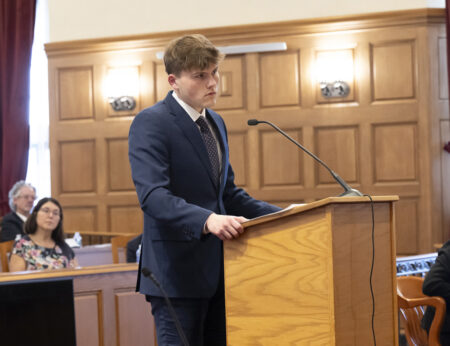
A year later, with their brief accepted, Chatrchyan and her students traveled to Barbados, where the court was holding a public hearing on the obligations of member states to respond to climate change as a threat to human rights. In three jam-packed days of oral arguments, the Cornell Law students were allotted ten minutes to state their case.
The question: Are nations obligated to respond to the climate change on the basis of international human rights law? The court’s answer, published in July, was a significant win for climate justice advocates. Yes, the right to a healthy environment is foundational to other human rights. Yes, nations are responsible for protecting their populations from climate change. Yes, all branches of government are responsible for working together to protect, restore, and regenerate ecosystems. Yes, nations are obligated to regulate third parties, including corporations, to prevent human rights violations to the environment.
“Pursuant to the best available science,” wrote the judges in a unanimous decision, “the present situation constitutes a climate emergency . . . and represents a severe threat to humanity. This climate emergency can only be addressed adequately by urgent and effective mitigation and adaptation actions, and by making progress towards sustainable development with a human rights perspective, coordinated around resilience.”
The court’s advisory opinion, which echoes much of the Cornell argument, represents an important step for the movement, and even though it isn’t legally binding, the decision will continue to reverberate around the world, especially at the upcoming UN Climate Change Conference in Brazil. Closer to home, the opinion affirms Ohlin’s vision of an expanded Cornell program in environmental law, with his sights set on hiring a second full-time faculty member and creating a hands-on environmental law clinic.
“Protecting the environment is an existential challenge for humanity,” says Ohlin. “There’s a moral obligation that requires us to take care of the world we all share, and as lawyers, we’re committed to using the law to solve problems around collective action. I’m deeply invested in doing everything we can to build capacity at the Law School, and to train the lawyers who are going to have a major impact in the future.
“Ezra Cornell’s vision of doing the greatest good still matters, perhaps more now than ever,” he continues. “He could have done anything with his fortune and his clout, and he used it to create this land-grant university. It still guides our Law School, and we clearly see our environmental law program in that light.”