In 2018, Eric Fastiff ’95 got the call that changed his career.
That spring, an attorney he had worked with got in touch with a proposition.
The Yurok Tribe of Northern California was looking for legal representation as it battled the opioid epidemic, which was devastating Indian Country even as media coverage of the crisis focused on white victims. Fastiff’s colleague knew that Lieff Cabraser Heimann & Bernstein, the San Francisco–based plaintiff’s law firm where Fastiff was a partner and led the Antitrust Practice Group, had already been working on opioids cases. He wondered if the firm was interested in taking on the Yurok as a client.
After meeting with the tribe’s in-house attorneys and Tribal staff members, Lieff Cabraser was hired and filed the case.
And then two Northern California tribes got in touch asking for representation. Followed by the Alaska office of a law firm that represented tribal entities in that state, looking to collaborate.
“Within the span of a couple months, the firm went from no tribal clients to about twenty,” Fastiff said.
Fastiff had been at Lieff Cabraser for more than two decades working antitrust, consumer fraud, and a few mass tort personal injury cases, including lawsuits representing recipients of defective Sulzer hip implants that resulted in settlements worth more than $1 billion, as well as suits alleging anticompetitive practices by the makers of the antibiotic Cipro and of LCD panels that each produced hundreds of millions of dollars in settlements.
However, over the last seven years, Fastiff has executed a hard pivot into tribal law. Now at the head of the firm’s Native American Tribal Practice Group, he has found both professional success and personal fulfillment helping tribes seek redress from bad corporate actors, even as they struggle under the weight of problems—
addiction, unemployment, lack of health care—magnified by their historic dispossession.
“Everything bad that happens in North America happens worse in Native American communities,” said Fastiff. “It’s painting with a very broad brush, but it’s generally true. And helping people that have been harmed by our political system is why I’m a lawyer.”
Fastiff has filed cases representing tribes and tribal health organizations against opioid manufacturers like Purdue Pharma and Johnson & Johnson, and against McKinsey & Co. over the consulting firm’s work assisting opioid marketing efforts. Lieff Cabraser also serves on the Tribal Leadership Committee in the
National Prescription Opiate Litigation, where it has obtained more than $1.5 billion in settlements for tribes and tribal entities. Fastiff’s work has also included cases brought against Juul Labs and Altria over the damage caused by vaping that resulted in settlements of more than $63 million for tribal entities, and representing tribes harmed by water contamination.
“You go in as a lawyer, but also as somebody who’s very humble and wants to learn from your client,” said Fastiff, who does not have Indigenous ancestry. “You have to understand their governance and system and structure, but at the same time understand what their problem is and offer our services to help them solve whatever problems they’ve identified.”
Fastiff traveled up to Alaska in the fall of 2018 to meet some of his firm’s new clients. He met with tribal health organizations in Anchorage and Fairbanks serving tens of thousands of Alaska Natives, and ate moose, salmon, and caribou in Port Heiden, a 100-person village on the Aleutian Peninsula. “It’s really a fly-in, fly-out community, and even they have an opioids crisis,” he said. “Being able to talk to people, learning about the problems in their communities, how we can help them solve those problems, has been not only really interesting but incredibly rewarding professionally. I mean, this is why I went to law school, to help people solve their problems.”
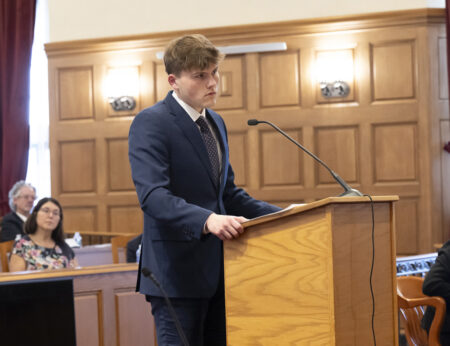
Fastiff also built in a bit of extra time in Anchorage to meet up with his old moot court partner Hollis French ’95—they hung the jury, “but we were better than they were,” French joked—and go hiking. “He was adventurous. A lot of guys come to Anchorage and do business, and they never leave the Captain Cook Hotel,” said French, a former Alaska state senator. “Eric was willing to put on a pair of boots and some gloves and go down Turnagain Arm.”
Fastiff had never taken a federal Indian law class before his career pivot, so he arranged to audit a hybrid course taught at Cornell Law School in Spring 2021. “Our kids made sure I had done the reading every night,” Fastiff said.
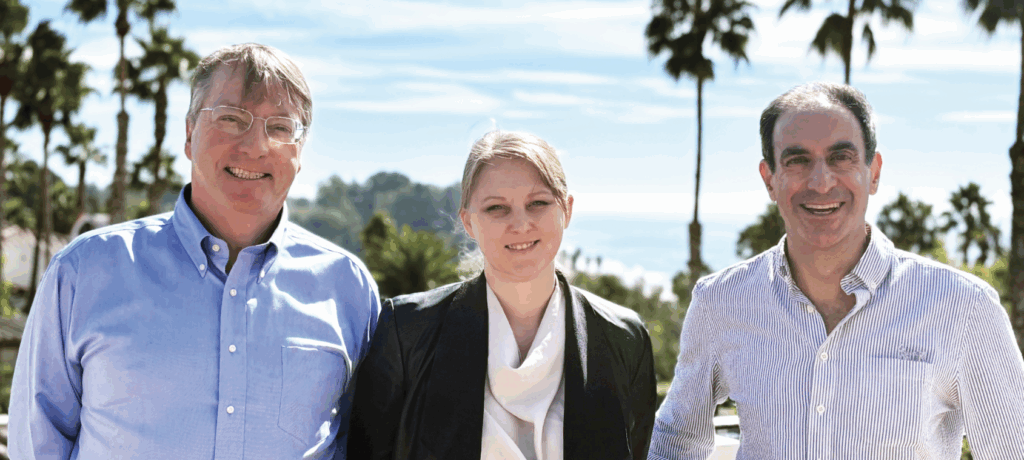
One of Fastiff’s classmates was Emily Harwell ’22, a member of the Mvskoke (Muscogee) Creek Nation of Oklahoma who praised the more experienced lawyer’s efforts to improve his understanding of legal work in Native communities. “The more you know about tribal clients, the more you can relate and understand their perspective,” she said. After graduation and a year spent at another firm, Harwell would end up joining Lieff Cabraser’s New York Office, where she found in Fastiff a mentor who combines “a little bit of tough love” with advocacy for his younger colleagues.
When he’s not working, Fastiff deploys his lawyerly instincts on the boards of a range of philanthropies. “I’m willing to ask questions, using the training that I got from the Law School just to ask a question and say, ‘This doesn’t sound right. Let’s talk this through,’ to the CEO or COO or CFO,” said Fastiff. He was a longtime member of the board of his children’s school and currently serves on the boards of the Northern California chapter of the Association of Business Trial Lawyers, Bay Area Legal Aid, and the San Francisco Campus for Jewish Living. Meanwhile, with Fastiff’s kids away at college—his son is a senior at Cornell, his daughter a sophomore at Wesleyan—Fastiff and his wife Rebecca Arons, who directs the Legal Writing Resource Center at the University of California College of the Law, San Francisco, have been enjoying the perks of an empty nest, with more time to enjoy concerts, lectures, travel, and dining out.
Fastiff has maintained a dedication to the Law School, where he has fond memories of Professor Kevin Claremont having him lecture his class on recognition and enforcement of foreign judgments, or of leveraging his love of boats to convince Professor John Barceló to teach his admiralty law class. He chairs the Dean’s Advisory Council and returns to campus multiple times a year to serve as a resource for students, especially those of the Native American Law Student Association. And he and Arons have been generous with financial gifts—most notably, founding and supporting the endowment fund of the Daniel Webster Barmon, LL.B. 1894, and Marcus Barmon, LL.B. 1898, Scholarship honoring Fastiff’s great-great-uncle and great-grandfather, respectively. Their aim: give graduates the freedom to choose their post–Law School paths with fewer financial constraints getting in the way.
In a lecture he gives at Cornell every year on plaintiff-side civil litigation, Fastiff says, “I ask students, ‘Why’d you go to law school? And who do you want to represent?’ Because I’m assuming the answer is, ‘I want to represent the victims of racial discrimination, and not the company that’s alleged to have been discriminating.’”
“There is a path to doing the kind of work that I do that doesn’t involve going to some large law firm and doing defense work for several years,” he went on. “What the student says is, ‘Well, I’ll decide after five years, after I’ve paid off my loans, to do what I want to do.’ And first of all, I hear those five years can be pretty tough. Second, you end up with a lot of conflicts. And third, I advise students, do what you want to do, instead of settling for some other job. Look at my career: one job, twenty-nine years so far.”
~Ian McGullam