
by Chris Brouwer
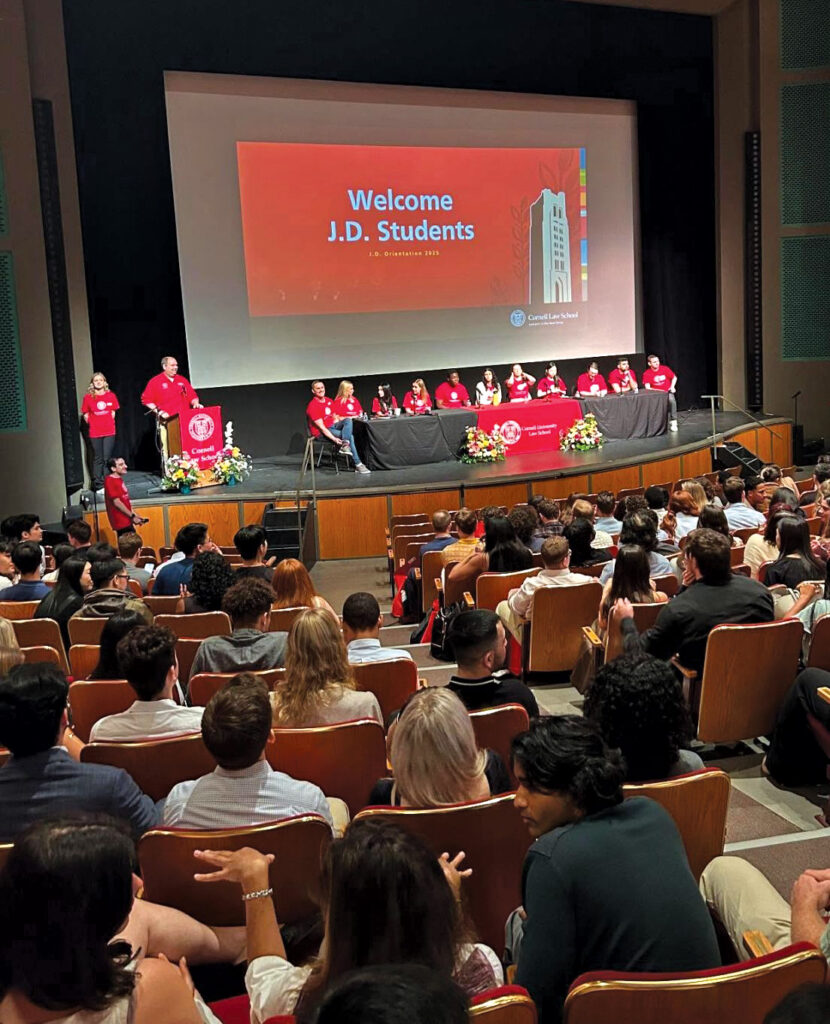
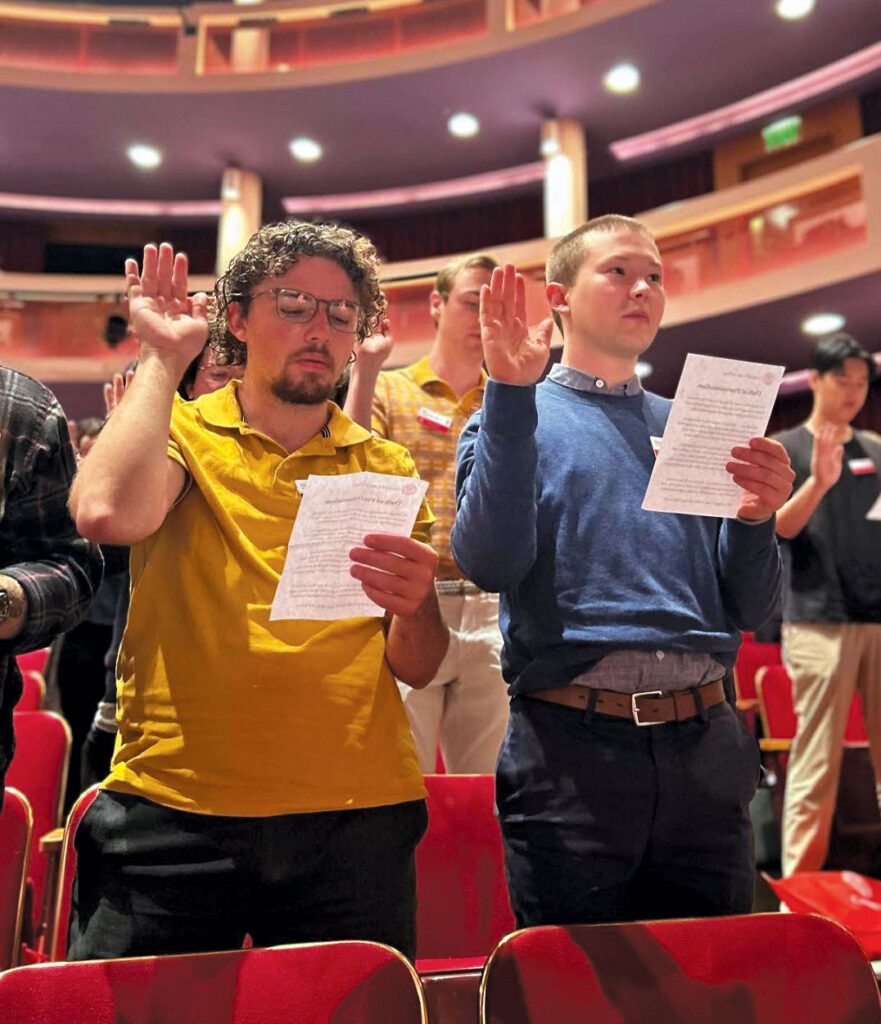
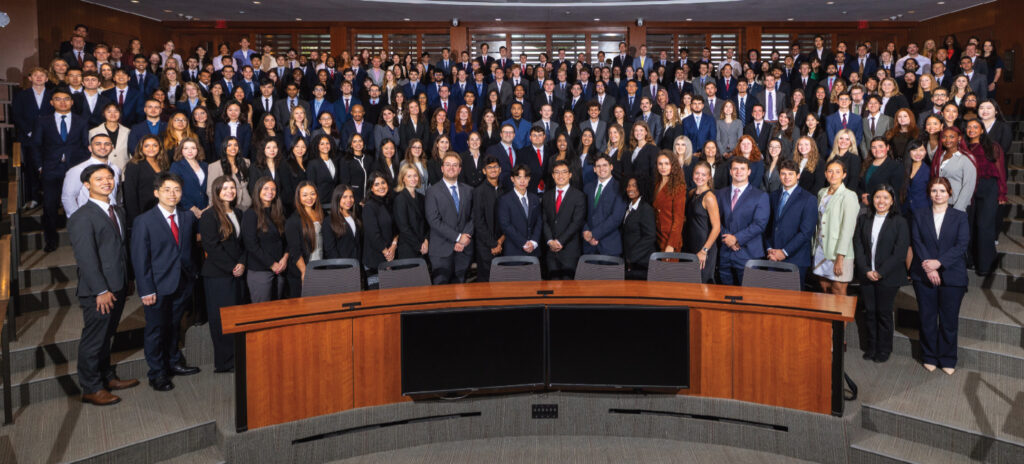
On the morning of August 19, under a bright, blue sky, members of the J.D. Class of 2028 made their way from Myron Taylor Hall to the Schwartz Center for the Performing Arts, where they gathered for the start of Orientation. What came next marked a new tradition. For the first time, Cornell Law students were formally administered an oath of professionalism at the start of their legal education.
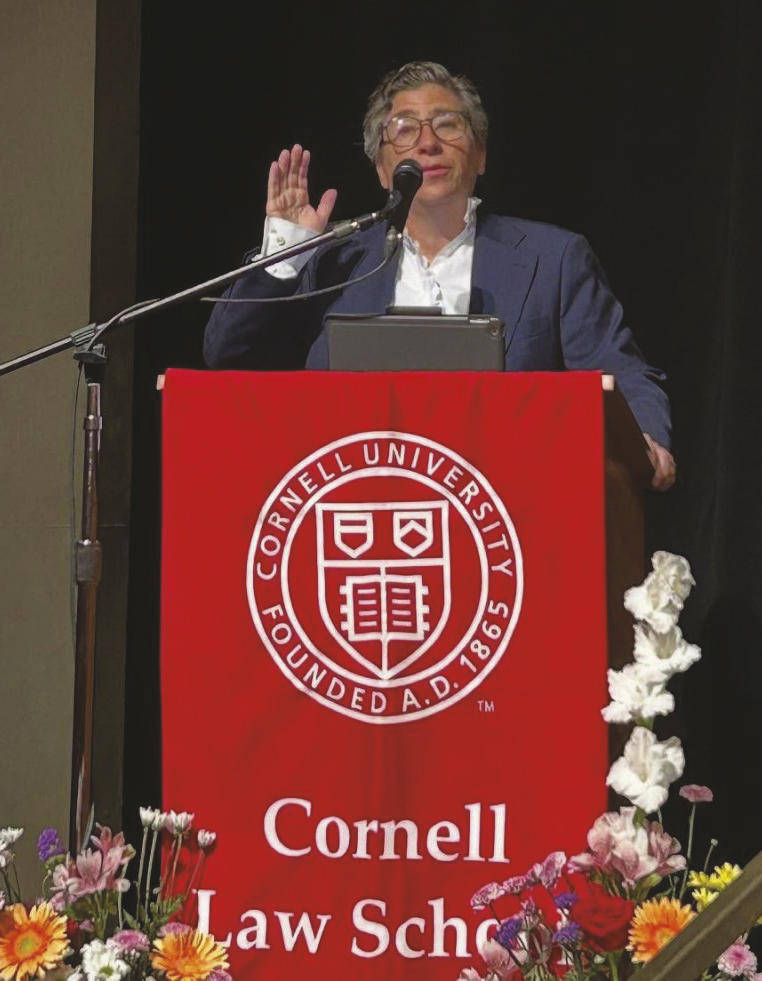
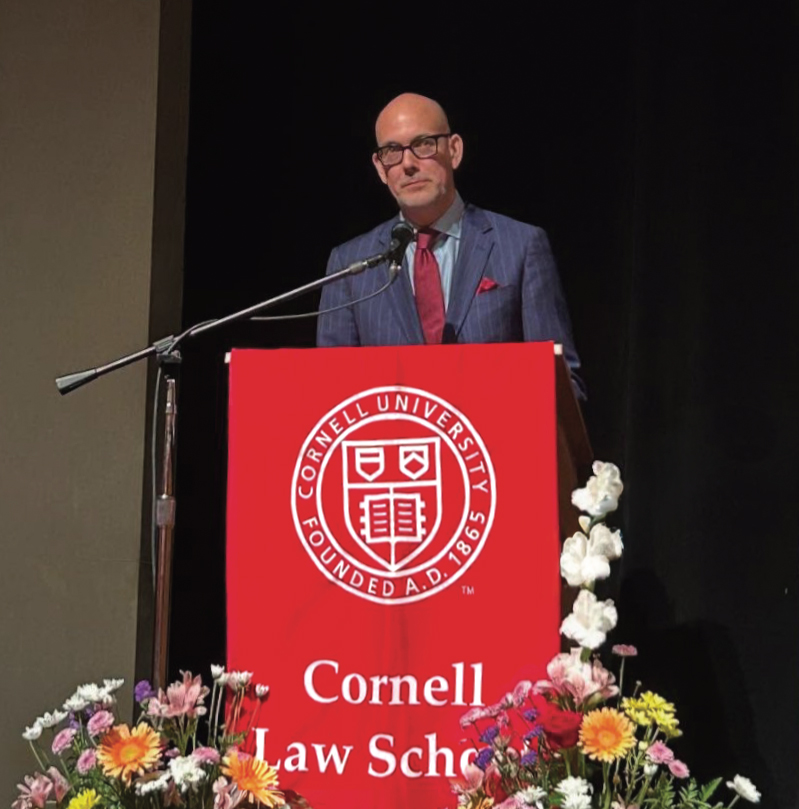
Standing before the class, the Hon. Alison J. Nathan ’00, circuit judge for the U.S. Court of Appeals for the Second Circuit, addressed the incoming students, recalling her own first days as a Cornell 1L—when she was unsure whether she truly belonged. “You belong here,” she told them, sharing how she overcame self-doubt through hard work, community, and a growing love of the law.

Drawing on her experience on the federal bench, Judge Nathan then explained why she thinks oaths are so important. “Whenever a new law clerk starts with me, I administer to them the oath of office . . . It is a solemn moment—a formal and ritualistic reminder of the role that they are taking on. A continuing renewal.
“So too the oath you are about to take. You and I will just be saying words. But with this ritual you will be making a promise to yourselves, to each other, to this law school, and to our common calling.”
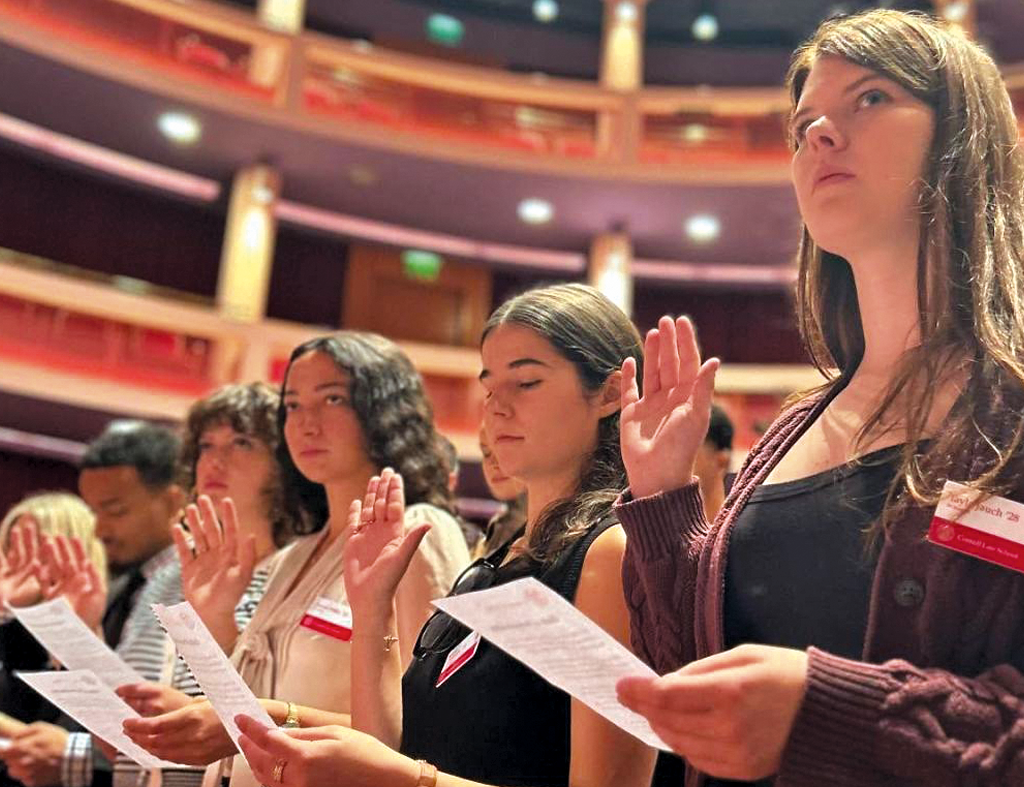
Only then did she invite the class to rise, raise their right hands, and repeat after her as she administered the Cornell Law Oath of Professionalism. It was an apt beginning for a class that is the first to take part in in the Law School’s new required Professional Development course—a program designed to transform such ideals into daily practice from the very start of legal education.
Building the Framework
The Professional Development course, a key initiative of Jens David Ohlin, Allan R. Tessler Dean and Professor of Law, represents one of the most significant curricular innovations in recent years. Introduced in fall 2025, the half-credit, yearlong sequence formally integrates lessons on professionalism, communication, wellness, and mentorship into the first-year experience.
Ohlin explained that early last year he went to the faculty and asked them to make the course a credit bearing experience and to make it a formal part of the mandatory first-year curriculum. Following their approval, he asked key administrators to begin designing the new course.
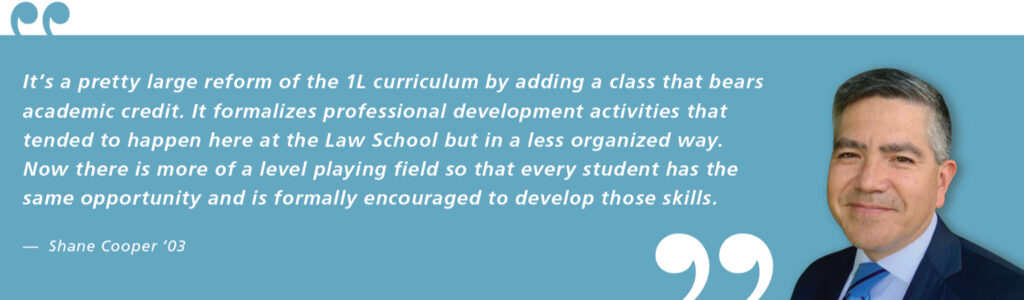
For Shane Cooper ’03, senior associate dean for admissions, financial aid, and student services, the change was both philosophical and practical. He helped shape the new program alongside Jenny Hutcherson, dean of students; Akua Akyea, associate dean for career development; and Michelle Whelan, associate dean for inclusion & belonging and clinical professor of law.
“It’s a pretty large reform of the 1L curriculum by adding a class that bears academic credit,” said Cooper. “It formalizes professional development activities that tended to happen here at the Law School but in a less organized way. Now there is more of a level playing field so that every student has the same opportunity and is formally encouraged to develop those skills.”
Cooper said the new course reflects Cornell Law’s longstanding mission to unite intellectual rigor with ethical purpose, translating the school’s ideal of producing “lawyers in the best sense” into tangible practice. Rather than an add-on, he described it as a recalibration of legal education itself—one that recognizes how today’s profession demands not only knowledge and diligence but also self-awareness, emotional intelligence, and a strong sense of professional identity.
According to Cooper, last year’s pilot programs—noncredit offerings on professional responsibility and lawyering in a democracy—set the stage for this year’s required course and its Orientation debut, including the oath of professionalism.
The framework for the new course emerged from months of cross-departmental collaboration and reflection on the needs of today’s students. The collaboration was driven in part by external factors in the legal market. According to Akyea, the pressures on first-year students have intensified as large law firms move their recruiting schedules earlier each year. “When things were normal, we didn’t start seeing students until about mid-October,” she said. “It just means that we started seeing students since the beginning of September.”
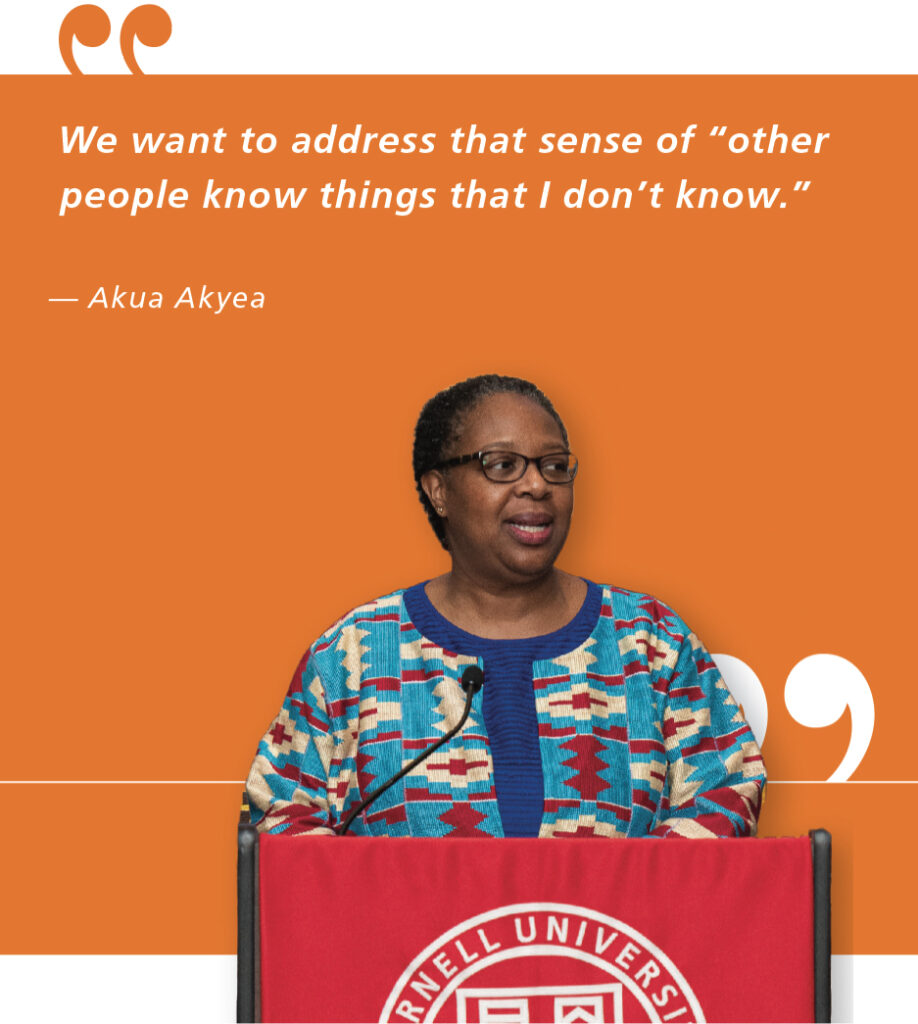
The new course, she explained, “gives students the resources and confidence to navigate this landscape—especially those who are first-generation or don’t already have networks in the field. We want to address that sense of ‘other people know things that I don’t know.’”

For Hutcherson, the program reflects both immediate necessity and long-term vision. She described the initiative as the product of a “perfect storm” of converging factors: evolving ABA standards that emphasize professional identity formation, post-pandemic concerns about mental health and social connection, and the accelerating pace of early recruiting.
Hutcherson, who joined Cornell Law in 2021 after years in student affairs at other law schools, said the program also reflects a shift in how institutions think about preparing students for the profession. Building the professional-development class into the curriculum helps demystify steps students “might have been more passive about” and gives them a structured nudge to engage.
Inside the Course
Following faculty approval, the course was embedded within the 1L curriculum as a required element of professional formation. Throughout the fall and spring semesters, students meet periodically for sessions built around four pillars: understanding the legal profession, networking and mentorship, wellness and resilience, and effective communication.
“All of these elements are really essential to success in the marketplace, because it’s not enough to be the most brilliant lawyer in the room,” said Ohlin. “You also have to be a skilled professional. No one likes hiring a brilliant attorney who’s scattered and is all over the place. A client doesn’t like that. Fellow lawyers don’t like that. And also, your bosses don’t like that.”
The course began with a lecture by Professor Brad Wendel on “Professional Responsibility and Lawyers in the Best Sense,” followed by workshops on résumé and cover-letter writing, mental health, and identity in the legal profession, each of which were followed by reflective writing assignments. In the spring semester, the course will delve into more advanced topics related to wellness, understanding the profession, networking, mentorship, and effective communication skills. Out-of-class experiences, such as the Myron Taylor Mixers and upcoming networking events with public-interest organizations and private law firms, give students a chance to apply what they learn in real time.
For Hutcherson, who oversees the wellness component, the course’s success lies in its integration of pragmatic and personal development. “We’re sneaking vegetables into dessert,” she joked. “Students come for the career stuff, and we make sure they also get the wellness piece.”

Yet the underlying message is serious. “Nationally, one in five attorneys have a drinking problem, one in ten have a drug problem, one in ten admit to ideas of suicide, which is twice the regular population,” she noted. “We want students to understand those realities now, not later.” Guest speakers like Jaimie Nawaday ’03, who will lead a session titled “Wellness Bar None: Building Your Professional Brand Without Alcohol,” help ground these lessons in lived experience.
Akyea acknowledged the double-edged sword of giving students more information earlier: it’s necessary, but can be stressful. But withholding it would be worse. The aim is to ensure students “feel like they’re better prepared and know where to go to ask the questions and get the resources.”
The class’s early sessions have drawn full attendance and strong engagement, Hutcherson notes. She credits much of the energy to the program’s teaching assistants—thirteen 2Ls and 3Ls who facilitate discussions, read reflections, and mentor 1Ls through their first semester. “It’s become the cool place to be,” she said with a smile. “We’re already getting emails from students asking to be TAs next year.”
Among those teaching assistants are Maya Henderson ’27, president of the Cornell Law Students Association, and her classmate Scott Kamen ’27. They both see the new course as an essential bridge between theory and practice.
“As a person who just went straight through undergrad to law school myself, some of us haven’t had a lot of experience in the professional world,” said Henderson. “We may have had internships, but having a job is different.” She also notes that much of her advising happens informally between classes: “If the most they can do is grab a coffee or a lunch in the middle of the day … we’ll just sit there and talk. And I’ve done that with quite a few students and it’s been really great.” The motivation is simple: “I guess just out of the kindness of my heart … we care about the individuals in their own capacity as people and not necessarily just as students.”
Kamen, who worked as a paralegal before law school, says the required course ensures broad access to foundational know-how: “Every student in the 1L class will get the fundamental skills that they need to succeed in whichever career path they choose, whether that’s public interest or the private sector.” He’s fielding practical questions from 1Ls—résumés, cover letter writing, networking—and is enthusiastic about the opportunities they will have to work on their skills at upcoming events.
His advice to 1Ls: “Utilize your TAs. Ask two, maybe three folks the same question and learn about what they experienced.”
Henderson and Kamen agree that the course has already begun to change how students talk about professionalism, transforming it from something abstract into something personal.
A Culture of Connection
Networking—often one of the most intimidating parts of early legal training—features prominently throughout the course.
This fall, students will have the opportunity to attend both a Public Interest Law Academy and a major law-firm reception at the Ithaca Convention Center, where forty firms, most from New York City, will send attorneys and alumni to meet students. “It’s not a job interview,” Akyea emphasized. “It’s a low-pressure opportunity to talk to practitioners, to hear what their work really looks like day to day.”
Hutcherson recalled the recent Myron Taylor Mixer, which featured alumni members of the Dean’s Advisory Council, as a low-stakes icebreaker. When students told her, “I don’t know how to network,” she replied with practical advice and humor, ‘Go find someone who looks interesting and talk to them. Just go stand there until they acknowledge you and then meet them.” The advice worked. Alumni later told her they were impressed by the students’ curiosity and professionalism.
The point isn’t theatrics; it’s practice. As Hutcherson put it, in-person conversation has become “an art form that [students]… need to practice on.” Building class time and credit around these activities “gives them the impetus that they need to actually get involved.”
Echoing that point, Akyea stresses that networking isn’t about performing extroversion. She reminds students—even “a very profound introvert” can approach conversations with curiosity: “What do you do? How do you do it?” The goal is to “separate that sense of like, I have to be a certain way” and build confidence telling one’s story.
Beyond skill-building, the course reinforces Cornell Law’s community ethos. Cooper emphasized that collaboration across offices—Career Development, Student Services, Admissions, and Academic Affairs—was essential. “We each bring different expertise,” he said. “Together we’re modeling the kind of teamwork we hope our students will practice as lawyers.”
Cornell’s initiative also positions the school among the nation’s leaders in professional-identity education. Although similar programs exist at Duke, Wake Forest, Minnesota, and Fordham, few top law schools have adopted a required, credit-bearing course for first-year students.
Hutcherson, who previously worked at Wake Forest, sees Cornell’s version as distinct. “Other schools’ program tend to be more about knowing your own brand and creating your own brand,” she said. “And ours is much more about, you’ve got a brand, it’s Cornell, what do you do with it?”
As the first semester unfolds, the early feedback is positive. Students have clear expectations, earlier access to mentorship, and more chances to practice professional skills in low-stakes settings.
Cooper sees the same transformation in broader terms. “This course has already exceeded our expectations,” he said. “Students are engaging with questions about who they want to be as lawyers—and that’s exactly what we hoped for. We’re not just preparing them for their first jobs; we’re preparing them for careers with integrity, purpose, and impact.”
Looking ahead, Cooper hopes the program will continue to deepen the school’s longstanding mission. He and other administrators view it as a living experiment—one that will evolve in response to student experience and the changing landscape of the legal profession.
“Students need this training right away,” says Ohlin. “They need to be ready to hit the ground running. They need to know how to talk with potential employers. We can’t wait to the third year to deliver this material.”
Back in the Schwartz Center, Judge Nathan’s words still echo: “Practice humility by remembering that your career is not just about you, but about how you can participate in and uplift your communities.” As the Class of 2028 embarks on its first year of study, those words—together with the new Professional Development course—remind them that becoming a lawyer is not only a matter of mastering the law, but of learning how to live it.